
An ion-exchange program can become expensive long before the glass reaches volume production. A team may be trying to compare recipes, investigate an unexpected sample, discuss a cover-glass requirement, or decide whether a process change deserves a broader trial. If the request is only “measure surface compression,” the real decision variables are still missing: glass composition, exchange route, sample geometry, depth question, reference method, target range, and the person who will interpret the result.
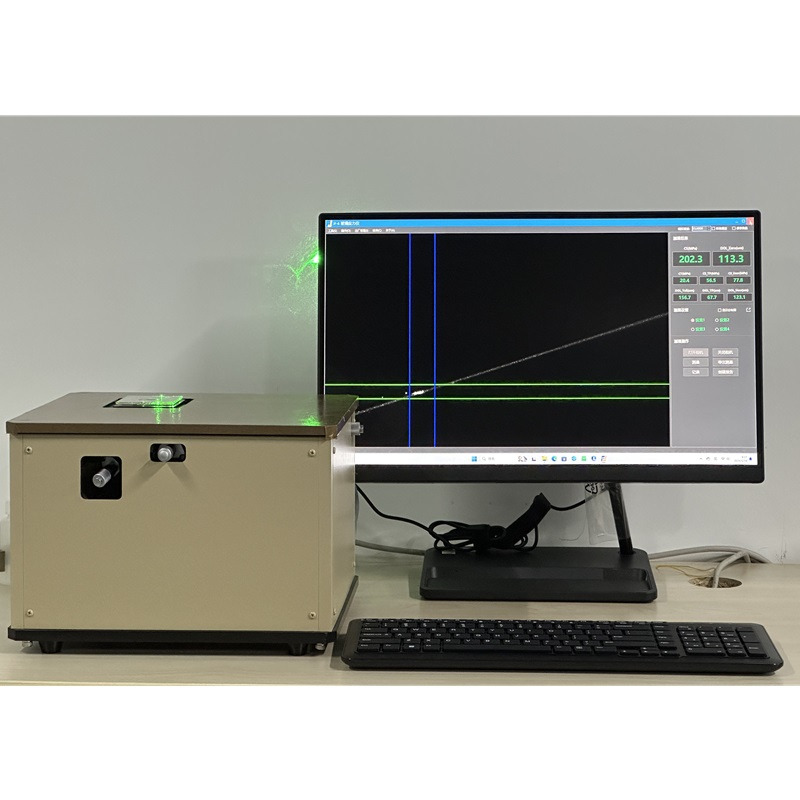
JF-6 uses scattered light photoelasticity to measure the stress distribution of chemically tempered glass. JF-6 can measure the stress distribution of chemically strengthened glass with Li+ to Na+ ion exchange. The stated stress range is CS 0~2000 MPa, and the stated depth-of-layer range is DOL 10~600 μm. The sample size is flat. These facts give an ion-exchanged-glass project a defined starting point for technical review rather than a blanket promise that every strengthened glass program fits the same route.
The commercial opportunity is clear: if a buyer cannot yet name the final instrument but can describe the material, treatment, sample, target property, and costly decision, that buyer is ready for a serious measurement conversation. The responsible next step is to review fit before presenting a number as a process verdict, a compliance conclusion, or a guaranteed outcome.
Why a surface-compression inquiry needs more than a range
In chemically strengthened glass, a buyer may use terms such as surface compression, stress distribution, depth of layer, ion exchange, or double ion exchange. Those terms are valuable, but they do not define the sample or the decision by themselves.
Before selecting a route, establish:
- Glass composition and treatment route, including the ion-exchange details that are known.
- Whether the sample is flat and whether its size, thickness, surface condition, and handling are suitable for the planned review.
- Whether the project needs stress distribution, a surface-compression discussion, a depth-of-layer discussion, or another defined output.
- Expected values, reference samples, current method, and the engineering or quality decision the result must support.
- The applicable internal method, customer specification, or standard context, plus the person who owns final acceptance.
This is not a delay tactic. It is how an R&D or quality team avoids selecting a model based on a high range while leaving the actual material, geometry, workflow, and acceptance problem unresolved.
JF-6 facts that affect an ion-exchanged-glass review
| Buyer question | JF-6 fact | What to confirm before selection |
|---|---|---|
| What principle is named? | JF-6 uses scattered light photoelasticity to measure the stress distribution of chemically tempered glass. | Confirm the actual glass, treatment, desired property, and method context. |
| Which ion-exchange wording is named? | JF-6 can measure the stress distribution of chemically strengthened glass with Li+ to Na+ ion exchange. | Provide the known exchange route and material details rather than assuming every chemical strengthening process is identical. |
| What applications are identified? | The stated applications include chemically tempered glass, double ion-exchange glass, and thermally tempered glass. | Review the exact project route; an application label is not a universal compatibility guarantee. |
| What stress range is stated? | The stated stress range is CS 0~2000 MPa. | Compare the required target range and method with the actual sample and decision objective. |
| What depth range is stated? | The stated depth-of-layer range is DOL 10~600 μm. | Define whether DOL is needed, how it will be used, and which reference method the buyer requires. |
| What sample condition is named? | The sample size is flat. | Treat non-flat, unusual, or difficult-to-handle samples as technical-review conditions. |
| What hardware/software details are named? | The stated light source is a 520 nm laser below 10 mW, and JF-6 uses JF-6 Glass Stress Meter Software. | Discuss standard operating needs without assuming unlisted reports, databases, APIs, or integrations. |
1. Turn the strengthening question into a measurement brief
An engineering team does not need to wait until every question is solved before starting a technical inquiry. It needs to make the unknowns visible. A useful first brief identifies the glass composition if known, the ion-exchange route, the sample’s flatness and dimensions, the surface-compression or depth question, the expected range, the reference sample, and the business decision driving the work.
That brief lets JF-6 be evaluated as a measurement route rather than a generic claim about stronger glass. It also reveals whether the project is a routine quality-control question, an R&D comparison, a process-development issue, or a custom measurement challenge.
The goal is commercially ambitious but technically sound: replace vague “can you test our glass?” messages with a defined request that can earn a technical quotation and a feasibility discussion.
2. Keep CS, DOL, and process decisions connected but distinct
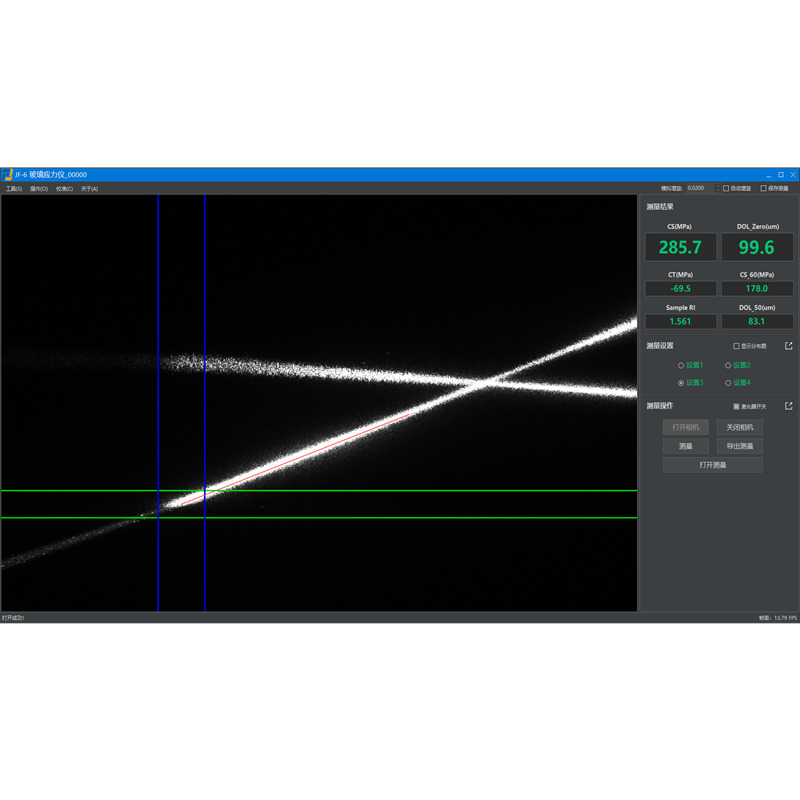
The stated CS 0~2000 MPa and DOL 10~600 μm ranges give a buyer concrete model facts to discuss. They should not be converted into a performance promise for every ion-exchanged glass, every recipe, or every sample. The buyer must still establish the target property, the expected range, the comparison method, and the person who will decide what a result means.
This distinction matters especially when a project has a new glass composition, a double ion-exchange development route, a customer requirement, or a disagreement between process and quality teams. A measured value may help the team compare evidence. It does not automatically explain a failure, optimize a recipe, ensure compliance, or replace a buyer-owned validation plan.
For buyers evaluating a broader chemically strengthened-glass portfolio, JF-4 Series and JF-2E can be part of a separate product-and-workflow comparison. Do not assign one model’s functions, limits, or workflow to another.
3. Use a custom requirement to create a better inquiry
Some of the best projects start where a catalog choice stops. A buyer may need a non-flat sample route, a special fixture, custom sample handling, a project-specific report, a database field, an interface to another system, or a different investigation sequence. These are not confirmed current JF-6 functions merely because a buyer needs them. They are requirements to be evaluated.
Jeffoptics can evaluate tailored hardware, software, fixture, reporting, or system-integration requirements after the project is defined. The feasibility review should identify the actual glass, sample variants, target output, points, workflow, data, acceptance method, integration responsibility, installation context, budget range, and target timeline.
This approach does not make the sales message weaker. It turns a speculative request into an inquiry that can be engineered, scoped, quoted, and followed up responsibly.
When a JF-6 inquiry should move beyond a standard selection
| Changed condition | Why it changes the scope | Practical next step |
|---|---|---|
| The sample is not flat or has unusual handling, coating, geometry, or access conditions | The stated flat-sample condition may not match the project. | Submit sample drawings, photos, dimensions, surface condition, and intended measurement areas for technical review. |
| The ion-exchange route or glass composition is new, unclear, or commercially sensitive | The material and treatment determine whether the stated method is worth evaluating. | Provide the available material and process description under the buyer’s preferred technical-review process. |
| The buyer needs custom reports, records, database fields, APIs, MES/ERP, or line integration | Those functions are not assumed as current standard capabilities. | Define the data owner, fields, format, interface, approval path, and integration context for feasibility review. |
| The result will be used for a customer, regulatory, or final acceptance decision | Measurement evidence does not replace the buyer’s validation and approval process. | Agree on the reference method, specification, correlation plan, threshold, and final decision owner. |
What to send in a useful JF-6 RFQ
- Glass composition if known, chemically strengthened or other treatment route, and relevant ion-exchange details.
- Flat-sample confirmation, dimensions, thickness, surface condition, handling constraints, sample photos, and sample count.
- Target stress-distribution, surface-compression, or DOL question, expected values, current method, and reference samples.
- R&D, quality-control, incoming-inspection, or process-development decision that the result must support.
- Applicable standard or internal method, acceptance basis, data/report requirement, and decision owner.
- Custom fixture, software, reporting, interface, integration, quantity, destination, installation, training, budget range, and schedule requirements.
Review the JF-6 Glass Stress Meter with a real sample and real decision context before treating a stated range as a complete application answer.
FAQ
Does JF-6 fit every chemically strengthened glass type?
No. JF-6 has stated chemically tempered and ion-exchange measurement scope, but the actual glass composition, treatment route, flat-sample condition, target property, method, and acceptance context need technical review.
Does the CS or DOL range guarantee a result for our process?
No. The stated CS and DOL ranges are model facts. They do not guarantee a result, process outcome, sample fit, or acceptance conclusion.
Can our project include custom sample handling, reporting, or integration?
Yes, as a feasibility requirement. Send the sample details, desired output, workflow, data fields, report format, interfaces, acceptance method, budget range, and target timeline for a tailored-project review.
Post time: Aug-11-2026