
Double ion exchange can turn a simple product search into a much larger measurement question. A buyer may need to compare surface compression, depth of layer, central tension, stress distribution, continuous measurements, or recorded outputs—yet still not know whether the glass chemistry and process route fit a standard configuration.
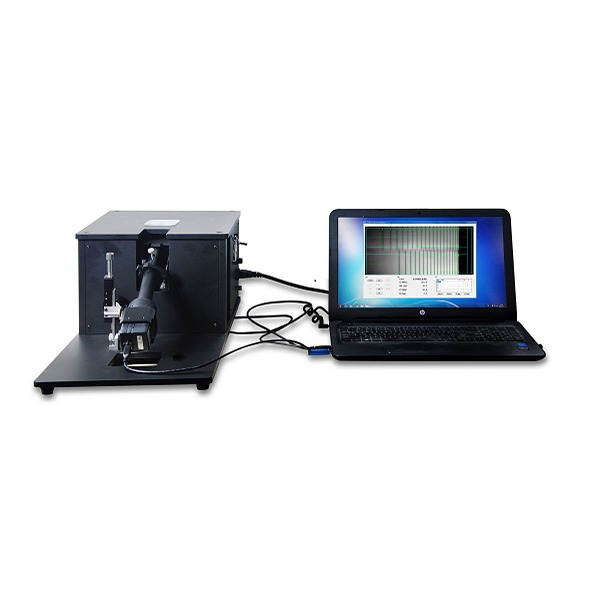
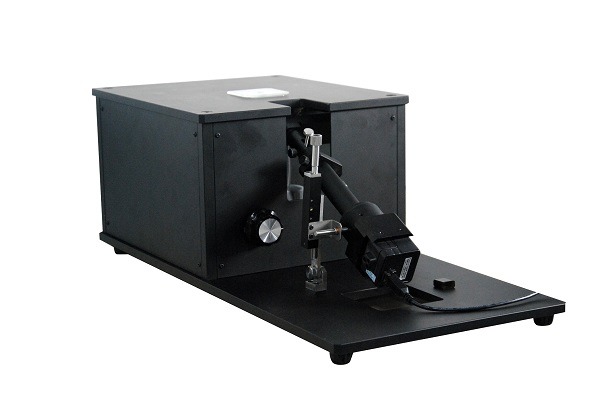
JF-4 Series is developed to automatically measure surface stress of chemically tempered and thermally tempered glass. Newly released software includes features suitable for double ion-exchange glass, stress-distribution display, continuous measurement, continuous CSV recording, and report export. The measurement range is 1000 MPa or 1500 MPa. The depth ranges are 5–50 µm, 10–100 µm, and 10–200 µm. These are strong reasons to evaluate JF-4 Series for a chemical-glass project—but not reasons to skip the material and method review.
The first purchase decision should be: what property must the team measure, on which chemistry, at what range and depth, for which quality or R&D decision? A result can support a defined measurement program; it does not by itself certify the finished glass, prove end-use performance, or make every ion-exchange route suitable for one instrument.
JF-4 Series facts that affect chemical-glass fit
| Buyer question | JF-4 Series fact | What to confirm before selection |
|---|---|---|
| Which job does the system perform? | JF-4 Series automatically measures surface stress of chemically tempered and thermally tempered glass. | Define whether the project is chemical or thermal, and identify the target property and decision. |
| Which values are part of the measurement conversation? | The product uses the optical waveguide effect for calculation of surface compression stress, depth of layer, and central tension stress for tempered glass. | Specify the required output rather than asking for a generic “strength test.” |
| What software workflow is currently named? | The PC software supports single measurement, continuous measurement, chemical-glass stress-distribution inspection, records, and printed reports. | Confirm the exact measurement sequence and report/output need. |
| What is the double-ion-exchange direction? | Newly released software includes features suitable for double ion-exchange glass, stress-distribution display, continuous measurement, continuous CSV recording, and report export. | Submit the exact glass chemistry and process route for compatibility review. |
| What range/depth scope is stated? | The measurement range is 1000 MPa or 1500 MPa. The depth ranges are 5–50 µm, 10–100 µm, and 10–200 µm. | Match the required values to the actual configuration and target decision. |
| Which exclusions are already known? | The product cannot be applied to chemically tempered glass produced by Li+ in glass and Na+ in salt-bath ion exchange or to chemically tempered photochromic glass. | Do not assume a standard JF-4 fit; begin a technical review instead. |
1. Start with the measurement decision, not the word “strength”
Chemical-strengthening programs often use broad language such as “stronger glass,” “better treatment,” or “a double-ion-exchange check.” Those phrases are commercially important, but they are not precise enough for an instrument decision.
JF-4 Series is intended to bring specific measurement values into the conversation: surface compression stress, depth of layer, and central tension stress. The buyer should name which value must support the next decision. Is the team comparing a process recipe? Reviewing a development sample? Establishing an internal quality check? Preparing a customer discussion? Or defining a measurement protocol for a future project?
That distinction prevents a common sales failure: promising a result before the buyer has stated the sample, ion-exchange route, range, depth, reference method, and acceptance owner. The stronger inquiry is the one that supplies those inputs early enough to determine whether a standard configuration, a changed workflow, or a custom project is the responsible route.
2. Use the double-ion-exchange software facts to frame a real workflow
The named JF-4 Series software features are commercially useful because they turn an abstract R&D request into a concrete workflow discussion. The current product facts include features suitable for double ion-exchange glass, stress-distribution display, continuous measurement, continuous CSV recording, and report export.
For a buyer, the questions become practical:
- Does the laboratory need single measurements, continuous measurements, or stress-distribution inspection?
- Which samples, recipes, or production lots will be compared?
- Which data fields must accompany each result?
- Is CSV recording sufficient, or does the buyer need a different report, database, interface, or approval workflow?
- Who will decide whether a result is a process input, an R&D observation, or an acceptance trigger?
Do not silently turn those current facts into a cloud platform, API, MES/ERP link, automated line, or guaranteed traceability program. When the buyer needs functions beyond the stated PC workflow, describe them as requirements for a software or system-integration feasibility review.
3. Keep the chemistry boundary visible
One of the most valuable parts of a technical article is the condition that prevents a bad purchase. JF-4 Series cannot be applied to chemically tempered glass produced by Li+ in glass and Na+ in salt-bath ion exchange or to chemically tempered photochromic glass. That statement should be treated as a selection boundary, not hidden at the bottom of a quotation.
If a project falls into that excluded route—or if the buyer cannot identify the glass composition, salt-bath chemistry, or photochromic condition—the right next step is not to promise a workaround. Send the material and process details for review. Jeffoptics can evaluate whether another standard measurement route, a modified configuration, or a tailored hardware, software, fixture, reporting, or system-integration project is worth pursuing.
4. Match range and depth to the real program
JF-4 Series states 1000 MPa or 1500 MPa measurement ranges and depth ranges of 5–50 µm, 10–100 µm, and 10–200 µm. The accuracy specification is 20 MPa. Those values are useful only when connected to the buyer’s actual sample and required decision.
Before an RFQ, collect the target surface-compression range, depth expectation, material composition, ion-exchange route, sample thickness and geometry, current method, number of measurement points, expected frequency, reference samples, and the output that the laboratory must retain. That turns a product-page discussion into a viable measurement program.
JF-4 Series can be customized according to requirements. Customization is an invitation to define the real project; it is not a promise that every chemistry, range, workflow, or data request has already been validated or can be delivered on a fixed schedule.
What to send in a JF-4 Series inquiry
- Glass composition, chemical or thermal treatment route, ion-exchange details, salt-bath details, and photochromic condition where relevant.
- Required measurement output: surface compression, depth of layer, central tension, stress distribution, or another defined question.
- Expected range and depth, sample dimensions, thickness, geometry, surface condition, and representative samples or drawings.
- Current measurement method, reference samples, internal specification or standard context, and acceptance owner.
- Single/continuous measurement requirement, desired CSV/report fields, record ownership, and any additional software, interface, automation, fixture, or integration requirement.
- Quantity, destination, budget range, target schedule, installation/training need, and whether a standard, modified, or custom project is acceptable.
Review the JF-4 Series product page and the Surface Stress Meter category. For another glass-stress route, see JF-2E.
FAQ
Is JF-4 Series suitable for every double-ion-exchange glass program?
No. The software includes features suitable for double ion-exchange glass, but the buyer must provide its glass chemistry, ion-exchange route, target range, depth, sample condition, and workflow for a fit review.
Can JF-4 Series measure chemically tempered photochromic glass?
No. That condition is explicitly outside the stated product application. Submit the material and measurement goal to evaluate another route.
Does JF-4 Series certify chemically strengthened glass to ASTM or another standard?
No. A product measurement result and a standard reference are not product certification or an end-use performance guarantee. The buyer owns the applicable method and acceptance decision.
Does CSV recording mean JF-4 Series already connects to MES, ERP, or a cloud platform?
No. Continuous CSV recording and report export are named current software features. Any database, API, MES/ERP, cloud, or custom data path requires a separate feasibility review.
What is the fastest way to qualify a JF-4 Series project?
Send the glass composition and ion-exchange route, target output/range/depth, samples, current method, desired data workflow, acceptance context, quantity, destination, budget, and timing.
Post time: Aug-04-2026