
When a curved heat-treated panel becomes the reason a process review, supplier conversation, or release decision slows down, the useful question is not simply, “Can we measure it?” The useful question is which property must be measured, on which sample and location, with which method, and what decision the result is supposed to inform.
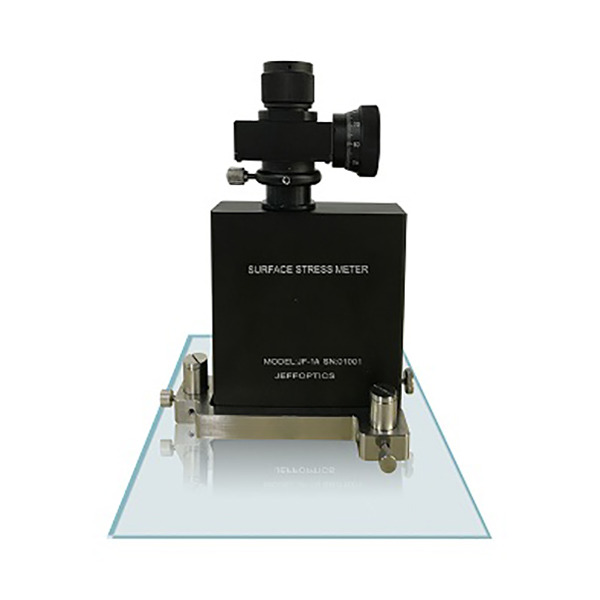
JF-1A is applied to measuring surface stress of thermally toughened and heat-strengthened glass. JF-1A can also measure glass with a radius of curvature greater than 300 mm. JF-1A uses the DSR Method. The measurement range is 15~400 MPa, and resolution is 3 MPa. For a buyer evaluating a curved heat-treated sample, those facts create a real technical starting point rather than a generic promise about every glass shape.
That starting point matters because a curve is only one part of a fit decision. Glass treatment, radius, thickness, access to the planned measurement location, optical condition, expected stress range, current method, comparison sample, and acceptance basis can all change the conversation. A numerical result can support a disciplined comparison; it does not automatically identify a root cause, release a batch, or establish compliance.
Why curved glass needs a defined measurement question
Curved panels often arrive with an urgent business story: a new program is under review, a process setting is being questioned, two samples appear different, or a technical buyer needs confidence before authorizing a broader investigation. The fastest responsible route is to turn that story into a measurement brief.
Ask five questions before choosing a standard instrument:
- Is the sample thermally toughened or heat-strengthened glass?
- What is the actual radius, and is it greater than 300 mm at the intended location?
- What surface-stress decision must the reading support: process comparison, incoming inspection, R&D, or another buyer-owned review?
- What reference sample, target range, internal requirement, or test method will be used?
- Who owns the final acceptance decision after the measurement is complete?
For a curved automotive, architectural, or specialty-glass inquiry, these questions are a commercial advantage. They turn a vague request for “a meter for curved glass” into a qualified conversation that can end in a standard product fit, a modified workflow worth evaluating, a custom-project feasibility review, or an honest decision that no responsible fit has yet been identified.
JF-1A facts that affect a curved-glass review
| Buyer question | JF-1A fact | What to confirm before selection |
|---|---|---|
| Which glass is in the stated scope? | JF-1A is applied to measuring surface stress of thermally toughened and heat-strengthened glass. | Confirm the actual treatment route; do not generalize this scope to every glass composition or process. |
| What is the stated curvature condition? | JF-1A can also measure glass with a radius of curvature greater than 300 mm. | Provide the real radius, drawing or profile, measurement location, and access condition. |
| Which method is named? | JF-1A uses the DSR Method. | Define whether the buyer’s method, reference sample, and decision objective are compatible with the planned review. |
| What range is stated? | The measurement range is 15~400 MPa. | Compare the target range and expected reading with the requested measurement purpose. |
| What resolution is stated? | Resolution is 3 MPa. | Establish the required comparison sensitivity and the buyer-owned acceptance basis. |
| How portable is the unit? | JF-1A features easy operation, small size, and portability; the instrument weight is 0.6 kg. | Review where the check will happen and how the sample will be safely supported. |
1. Turn a curve into a technical fit review
A curved panel is not a reason to stop the inquiry. It is a reason to be more precise. The radius condition gives the buyer a clear first filter: identify whether the intended measurement area is above the stated 300 mm radius threshold. Then move beyond radius alone.
The next review should include glass treatment, thickness, panel dimensions, surface condition, accessible measurement locations, how the sample will be supported, the target range, and the decision that the result must support. This is especially important when a buyer is trying to compare a trial batch with a reference batch, evaluate a furnace setting, or understand whether a curved sample deserves a deeper laboratory investigation.
The commercial message can be bold without becoming careless: do not let an undefined curve turn into an undefined quality decision. Send the drawing, sample photos, and measurement objective before a team loses more time debating whether an instrument is suitable.
2. Use the portable workflow to improve the conversation, not to overpromise
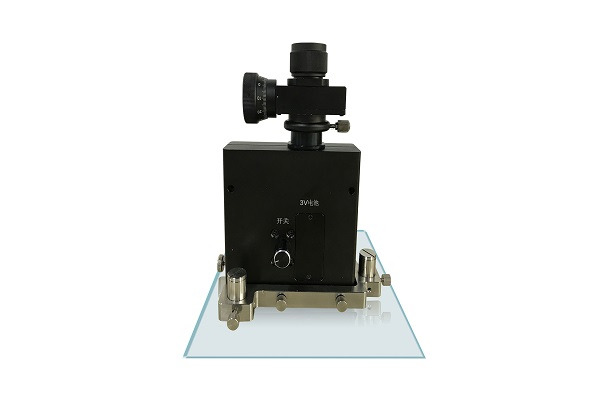
JF-1A features easy operation, small size, and portability. That makes a portable review route worth discussing when a team needs to bring a defined measurement question closer to a lab, quality station, process area, or sample-holding location.
Portability does not mean that every place, sample, or process condition is automatically ready for a measurement. A buyer should still define safe sample support, operator access, the DSR-method procedure, measurement points, the comparison sequence, and what happens when a reading differs from the expected range.
This distinction protects the purchase decision. It avoids buying a device based on a photograph or a single range number, then discovering that the real issue was sample access, an undefined acceptance rule, a nonstandard workflow, or a data requirement that has not been scoped. It also gives the buyer a better basis for comparing JF-1A with a PDA-assisted route such as JF-3B or an automatic-workflow discussion such as JF-3E.
3. Make the measured value useful to the next decision
The value of a surface-stress review is not the existence of a number by itself. It is the quality of the comparison around that number. Before a team changes a process, challenges a supplier, or escalates an apparent variation, it should agree on the sample identity, curve and measurement location, test sequence, target range, reference method, and acceptance owner.
For a simple pilot, work with representative samples. Record the treatment route, radius, dimensions, intended points, target decision, and the person responsible for interpreting the result. If the measured evidence does not settle the question, that is still a useful outcome: it tells the buyer which additional variable needs to be investigated instead of creating false confidence.
Do not treat a JF-1A review as a guarantee of a pass/fail result, defect diagnosis, regulatory conclusion, or universal curved-glass compatibility. The buyer’s quality system owns those decisions.
When a standard route should become a project discussion
| Changed condition | Why it changes the inquiry | Practical next step |
|---|---|---|
| The radius is at or below the stated condition, or varies across the panel | Radius alone cannot establish a standard-model fit. | Send a profile, drawings, photos, and intended measurement points for technical review. |
| The glass is not clearly thermally toughened or heat-strengthened | The stated JF-1A scope may not answer the material or process question. | Clarify glass composition, treatment, and target property before selecting a method. |
| The buyer needs a higher-volume, multi-operator, automatic, or line workflow | A portable review can be a starting point, not proof of a complete station design. | Compare another standard workflow or discuss a tailored project. |
| The project needs a special fixture, report, database, API, MES/ERP link, or other integration | Those functions are not assumed as current JF-1A features. | Define the required hardware, software, reporting, and interface outcome for feasibility review. |
Jeffoptics can evaluate a tailored hardware, software, fixture, reporting, or system-integration route after the requirement is defined. That evaluation may lead to a standard product, a modified workflow, a custom project requiring feasibility work, or a conclusion that no responsible fit is available. No delivery, price, performance, or project outcome should be assumed before that review.
What to send in a useful JF-1A RFQ
- Glass type, thermal treatment, and the surface-stress decision the result must support.
- Radius, drawings or curvature profile, dimensions, thickness, sample photos, and accessible measurement locations.
- Expected stress range, current method, reference samples, and the reason for the new measurement review.
- Applicable standard or internal specification, comparison method, and the person who owns final acceptance.
- Sample count, measurement frequency, operator workflow, and whether the project is for lab, quality control, process setup, or another use.
- Required records, report fields, interfaces, quantity, destination, target schedule, budget range, installation, training, and any custom requirement.
For the exact model identity, review the JF-1A Glass Surface Stress Meter with the actual sample information rather than relying on an assumed application.
FAQ
Can JF-1A measure every curved glass panel?
No. JF-1A can also measure glass with a radius of curvature greater than 300 mm, but radius is only one fit condition. Treatment, geometry, access, surface condition, method, target range, and the buyer’s decision context still require review.
Does JF-1A prove that a curved panel passes quality requirements?
No. JF-1A can support a defined surface-stress measurement review. The buyer’s own quality team must establish the method, reference sample, applicable requirement, and final acceptance decision.
Can a curved-glass inquiry include a custom fixture or data workflow?
Yes, it can be raised as a project requirement. Provide the sample profile, measurement points, fixture concept, data fields, reporting needs, interfaces, acceptance method, budget range, and timeline so feasibility can be evaluated.
Post time: Aug-13-2026