
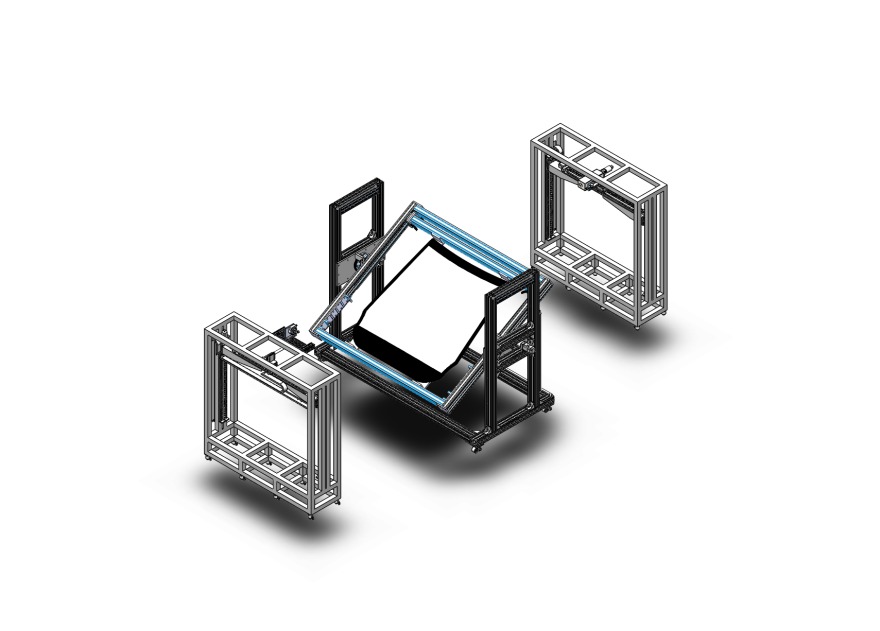
For an automotive-glass laboratory, a secondary-image result is useful only when the team knows where and under which viewing conditions it was obtained. The Jeffoptics Secondary Image Separation Test System Lab version provides a way to investigate that question. The Lab version can test the secondary-image separation value of dedicated points at different viewing angles on a specified installation angle with vision-system guidance. The stated sample-loading-angle range is 15 degrees to 75 degrees, customized. Define the actual windshield, points and angles before comparing results.
Start with the area and the optical question
The Secondary Image Separation Test System is an independent measurement system that executes image-separation detection in the camera area and other areas of glass. Secondary-image separation is the angular separation between a primary image and a secondary image; it is a specific optical measurement, distinct from a general judgement about every possible cause of perceived ghosting.
For a new windshield, the lab should identify the areas relevant to its test plan, the reference location used to identify each point, and who owns the acceptance criteria. The system’s dedicated-point and viewing-angle capability provides a way to structure this work around defined positions rather than an unlabeled observation.
| Lab system reference | Listed detail |
|---|---|
| Measurement | Secondary-image separation at dedicated points |
| Viewing | Different viewing angles at a specified installation angle |
| Sample loading angle | 15–75 degrees, customized |
| Sample-size ranges | 1.9 × 1.6 m and 1.0 × 0.8 m, customized |
| Result functions | Exceed-limit alarm; record, print, store and export |
Configuration reference: laboratory system official product information, verified July 2026. The sample sizes and loading angle are subject to the stated customization; establish the proposed configuration for the actual project.
Connect each point to the sample and angle
The stated sample-size ranges are 1.9*1.6 m and 1.0*0.8 m, customized. A point plan should identify the windshield variant, its mounting orientation and the coordinate convention used by the engineering team. Specify the installation angle and the viewing angles required for each area. This lets reviewers distinguish a change in measured separation from a change in the test position or presentation.
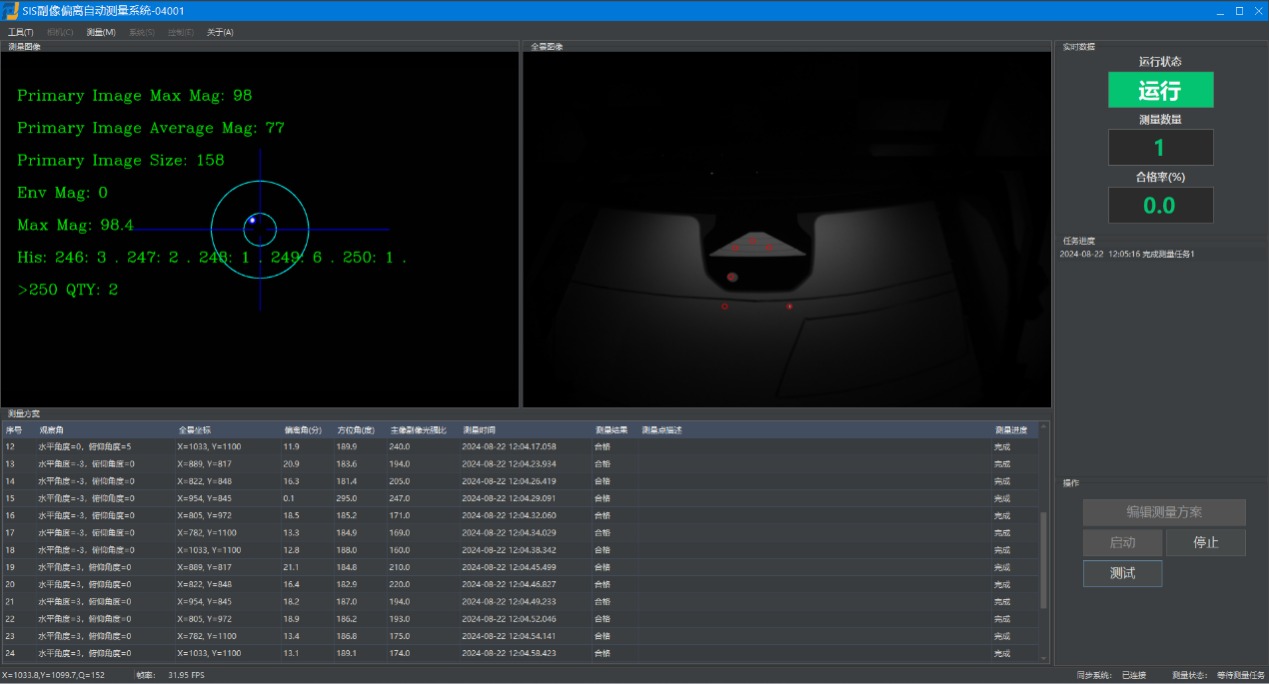
The system can show an exceed-limit alarm and can record, print, store, and export the test result. Agree on the relevant limit and record context as part of the buyer’s test plan; an alarm does not independently establish regulatory approval or a complete windshield qualification.
Review the fixture and movement before a new variant
Sample size, loading-angle range, measuring range, and mechanical-system movement range can be customized according to requirements. That makes a new geometry worth discussing early: send the dimensions, curvature, glass construction, areas of interest and intended loading orientation. Define any movement or access constraints and show how the laboratory expects to handle each specimen.
If a proposed point, sample or workflow differs from the listed configuration, Jeffoptics can evaluate a tailored solution. A point map and representative samples help the parties assess the fixture, movement, records and acceptance method without assuming that a proposed design already exists.
Request a windshield point-plan review
Provide a drawing or point map, glass dimensions and construction, installation and viewing angles, measurement target, acceptance basis, sample volume and desired records. Include quantity, destination, budget range and project timing. Review the lab system or discuss the point plan.
Frequently asked questions
Why specify viewing and installation angles with each measurement point?
They define the conditions under which the point is examined. Keeping those conditions with the sample and point identity makes comparisons more meaningful.
Does an exceed-limit alarm prove the windshield meets a regulation?
No. The buyer must establish the applicable test plan and acceptance basis; an alarm is a system function, not regulatory approval.
Post time: Nov-13-2026