
An online windshield inspection project should not begin with “Which sensor should we buy?” It should begin with a measurement plan: which windshield, which viewing or installation condition, which dedicated points, which secondary-image value, which cycle, which data output, and who owns the final acceptance decision.
The Online Secondary Image Separation Test System can be integrated into an automotive-windshield production line to measure windshield secondary-image separation angle. The system measures dedicated points on a sample at a designated installation angle according to the testing plan. The system can alarm when a value is abnormal, and results can be recorded, printed, stored, and exported. Those current product facts make the system a strong route to evaluate for a defined windshield quality project—not a generic promise that every ghost-image complaint has one cause or one ready-made station configuration.
The engineering task is to turn the optical symptom into a work package. Secondary-image separation is a measurement concept, while a production station also has to account for the windshield construction, measured areas, installation angle, sensor count, movement, transfer, darkroom, site, data path, and the buyer’s own acceptance method.
Online Secondary Image Separation System facts that affect station fit
| Buyer question | Current system fact | What the project team must define |
|---|---|---|
| What does the system measure? | It can integrate into an automotive-windshield production line to measure windshield secondary-image separation angle. | Identify the windshield program, the actual quality question, and the acceptance owner. |
| How is a test planned? | The system measures dedicated points on a sample at a designated installation angle according to the testing plan. | Provide the measurement areas, points, designated angle, reference condition, and decision route. |
| What can happen to the result? | The system can alarm when a value is abnormal, and results can be recorded, printed, stored, and exported. | Define the alarm threshold owner, report fields, data owner, retention, and interface requirement. |
| Is sensor count fixed? | Multi-sensor systems can be integrated according to measurement-performance requirements. | State point count, measurement range, target cycle, and coverage need. |
| Which mechanical conditions are fixed? | Sample size, installation-angle range, measurement range, and mechanical-system movement range are customized according to requirements. | Submit the actual windshield size, angle, points, movement, line flow, and site constraints. |
| What does the captured baseline show? | The captured baseline lists a sample-installation-angle range of 15° to 75° and measurement of 40 key points in 80 seconds, customized. | Treat these as configuration inputs, not as a universal quoted cycle or project guarantee. |
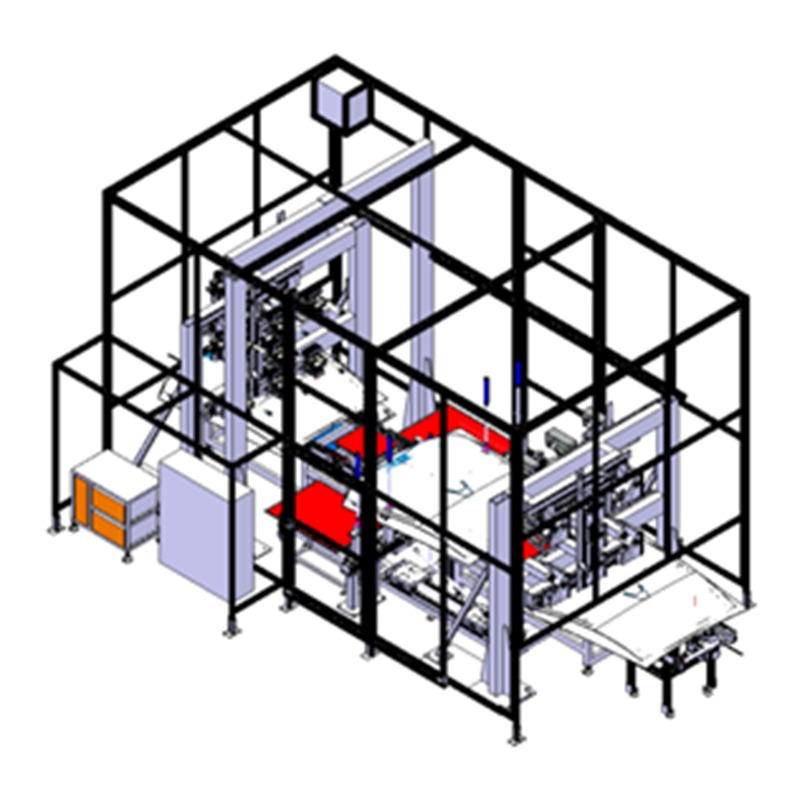
1. Convert a “ghosting” complaint into a measurable station brief
Windshield teams often begin with a visible symptom: a secondary image, a double image, a ghosting concern, an optical complaint, or a new program that needs a more consistent measurement plan. Those observations matter, but they do not themselves specify an instrument or a production station.
The Online Secondary Image Separation Test System gives the team a way to define a concrete property—secondary-image separation angle—at dedicated points and a designated installation angle under a testing plan. That shift is commercially useful. Instead of asking whether a system can “solve ghosting,” the buyer can explain which windshield, which area, which angles, which points, which condition, and which final decision are involved.
This does not establish a root cause or certify the product. It creates a disciplined starting point for a quality, R&D, technical procurement, and automation team to agree on the measurement work package before it commits to a station design.
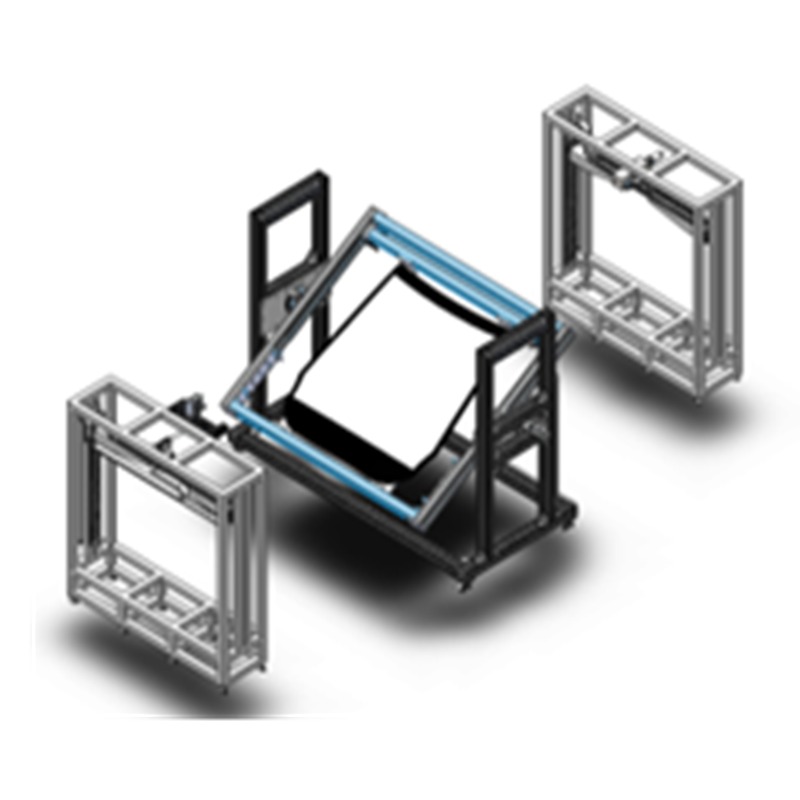
2. Treat point count and cycle as configuration decisions
Multi-sensor systems can be integrated according to measurement-performance requirements. The captured baseline lists measurement of 40 key points in 80 seconds, customized. Those two facts should stop a buyer from treating an online system as a fixed black box.
The project team should specify:
- How many dedicated points must be measured, and where are they located?
- Which windshield areas and installation angles are in scope?
- What measurement range and target cycle matter to the line?
- Is the system checking one product family or several models with different geometries?
- Which sensor count, sample movement, and waiting time are commercially acceptable?
- Which results trigger an alarm, a review, a recheck, or another buyer-owned decision?
The captured baseline lists a sample-installation-angle range of 15° to 75°. It is a useful planning reference, but the actual sample size, installation angle, measurement range, and mechanical movement range are customized according to requirements. Do not quote the baseline as a promise for another windshield or plant.
3. Design the data path with the quality decision
The system can alarm when a value is abnormal, and results can be recorded, printed, stored, and exported. This provides a direct route to discuss how the result will support a real quality action.
Before an RFQ, name the decision owner and data path. Does the production team need an alarm on the station? Does the quality laboratory need a printed report? Does the customer require a particular export field? Does an existing line need a defined interface? Does the project need a more specific report, system connection, or approval flow?
The current facts do not establish a cloud platform, API, MES/ERP connection, customer-specific interface, or a completed deployment. If the buyer needs those functions, state them as a requirement. Jeffoptics can evaluate a tailored hardware, software, reporting, or system-integration project after reviewing the station scope.
4. Put darkroom and mechanics into the first conversation
Testing needs to be performed in a darkroom, and the customer needs to prepare a large cover as the darkroom. The support bracket can be customized based on sample size, measurement area, and installation angle. These are not late-stage installation details; they are early technical and commercial inputs.
A productive station review should include the windshield drawing, construction, size, measured area, required installation angle, line flow, proposed transfer method, available manipulation equipment, darkroom location, site dimensions, utilities, and ownership split between the buyer and supplier. If the captured baseline does not suit the station, that is not a reason to abandon the inquiry. It is the point at which a modified configuration or custom project can be evaluated.
What to send for an online windshield-station review
- Windshield drawing, construction, dimensions, curvature, relevant opaque/frit areas, and sample photos where available.
- Secondary-image measurement objective, dedicated points/areas, designated installation angle, target range, applicable standard or internal acceptance plan, and final decision owner.
- Expected model count, point count, measurement frequency, target cycle, sensor/coverage concept, and current inspection method.
- Proposed line flow, transfer or manipulator concept, required bracket, available equipment, darkroom/site constraints, power/gas availability, and site layout.
- Alarm behavior, report/print/store/export requirement, data owner, required interfaces, and any custom software or integration need.
- Quantity, destination, budget range, project timing, installation responsibility, and whether a standard-baseline, modified, or custom station route is acceptable.
See the Online Secondary Image Separation Test System page, the Quality Control Equipment category, and OWADMS-01 for a related windshield optical-measurement route.
FAQ
Is the system a ready-made fit for every windshield line?
No. The sample size, installation angle, measurement range, mechanical movement range, sensor configuration, darkroom, and station interface must be reviewed for the actual project.
Does an ECE or other standard reference mean the system is certified or approved?
No. Standards provide the buyer’s measurement and acceptance context. They do not make the system certified, approved for every program, or a replacement for the buyer’s regulatory process.
Does the 40-point, 80-second figure apply to every production line?
No. It is a captured customized baseline. Define the actual windshield, points, angle, sensor count, cycle, and movement before using it for project planning.
Can the system connect to an existing production line?
The system can be integrated into an automotive-windshield production line, but the transfer, bracket, sample flow, site, utilities, interface, and ownership split must be reviewed for the actual line.
What if the station needs a different bracket, report, interface, or workflow?
Send the windshield and station requirements. Jeffoptics can evaluate a modified configuration or tailored hardware, software, reporting, fixture, or system-integration project.
Post time: Aug-03-2026