
A new windshield model is not a simple parameter update when the quality question involves secondary-image separation. Sample geometry, the designated installation angle, the measurement points, support, motion, darkroom condition, data output, and acceptance route can all change the project definition. Treating that work as a generic “template change” before these inputs are fixed is how an otherwise valuable automation inquiry becomes vague.
The Online Secondary Image Separation Test System can be integrated into an automotive-windshield production line to measure windshield secondary-image separation angle. The system measures dedicated points on a sample at a designated installation angle according to the testing plan. Sample size, installation-angle range, measurement range, and mechanical-system movement range are customized according to requirements. That is the right commercial starting point: define the windshield program first, then evaluate whether a standard, modified, or custom station route is responsible.
Online System Facts That Shape a Windshield Project Review
| Confirmed system detail | Why it matters to the buyer’s review |
|---|---|
| Automotive-windshield production-line integration for secondary-image separation angle | The project must identify the optical property to be measured, not merely describe a ghosting symptom. |
| Dedicated points at a designated installation angle under a testing plan | Point map and angle are core technical inputs for a new model. |
| Alarm, record, print, store, and export functions | Define the current workflow need while keeping unlisted data interfaces as project requirements. |
| Multi-sensor systems can be integrated according to measurement-performance requirements | Sensor count and station performance belong in the technical scope, not a generic catalogue request. |
| Customizable sample size, angle range, measurement range, and mechanical movement range | A changed windshield can be reviewed as a configuration or feasibility project. |
| 15°–75° baseline installation-angle range | Confirm the required condition against the captured baseline. |
| 40 key points in 80 seconds, customized | Use this as a customised baseline for discussion, never as a promise for every windshield. |
| Darkroom cover prepared by the customer; customizable support bracket | Site responsibility and sample support must be defined before a station decision. |
The captured baseline lists a sample-installation-angle range of 15° to 75°.
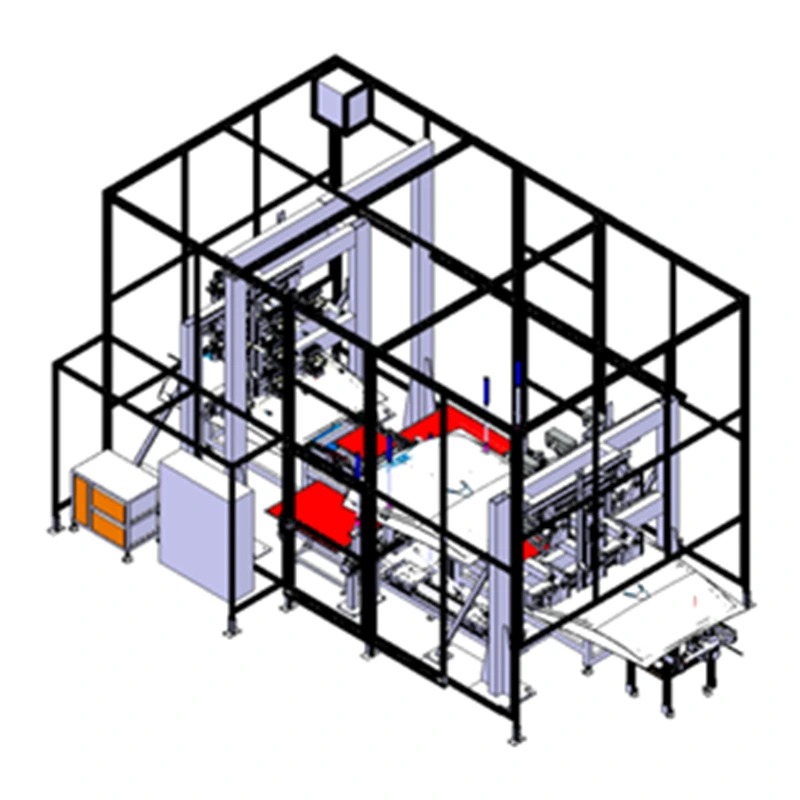
Start With the Measured Variable, Not the Symptom
“Ghosting” or an optical complaint can be commercially urgent, but it is not automatically a secondary-image separation specification. Windshield construction, wedge effects, viewing condition, angular deviation, secondary-image separation, optical distortion, and downstream display or camera concerns may need different measurement questions. The buyer should first identify the property that the testing plan must measure and the decision that result is meant to support.
The online system gives that conversation a defined scope: it measures windshield secondary-image separation angle at dedicated points and a designated installation angle according to the testing plan. This can help a launch or quality team replace an abstract automation request with a point map, angle definition, sample description, measurement purpose, and acceptance owner.
Three Things to Lock Before a Windshield Model Changeover
1. The sample, point map, and angle definition
Every windshield program begins with its actual construction and geometry. Share the drawing, dimensions, laminate or interlayer details where available, intended measurement area, number of points, and designated installation angle. The system’s baseline lists a sample-installation-angle range of 15° to 75°. That figure is a useful fit-check input; it is not a universal acceptance range for every program.
The support bracket can be customized based on sample size, measurement area, and installation angle. This creates a genuine project conversation when a new model differs from the current sample. It does not mean that any support arrangement, fixture, or windshield geometry is already approved without review.
2. The station workflow and environment
Testing needs to be performed in a darkroom, and the customer needs to prepare a large cover as the darkroom. That responsibility needs to be treated as a design input at the beginning, along with utilities, sample handling, access, safety procedures, operator flow, and ownership of alarm response.
The captured baseline lists measurement of 40 key points in 80 seconds, customized. A quality or launch team can use that customized baseline to ask a better technical question: how many points, what motion, what sensor concept, and what cycle target does this windshield actually require? Do not use it as a promise that every new model will receive the same point count or timing.
3. The result path and the buyer-owned acceptance decision
The system can alarm when a value is abnormal, and results can be recorded, printed, stored, and exported. Those are meaningful current workflow functions. A buyer should still define what happens next: who receives the result, which fields must be retained, what report is required, what reference is used, and who owns the final pass/fail or release decision.
If the project requires a particular database, dashboard, API, MES/ERP/QMS connection, custom report, robot coordination, or model-change workflow, describe it as a technical requirement. Jeffoptics can evaluate hardware development, software development, fixture design, reporting, and system integration after the scope is clear. The project should never present an unconfirmed interface or station sequence as a current feature.
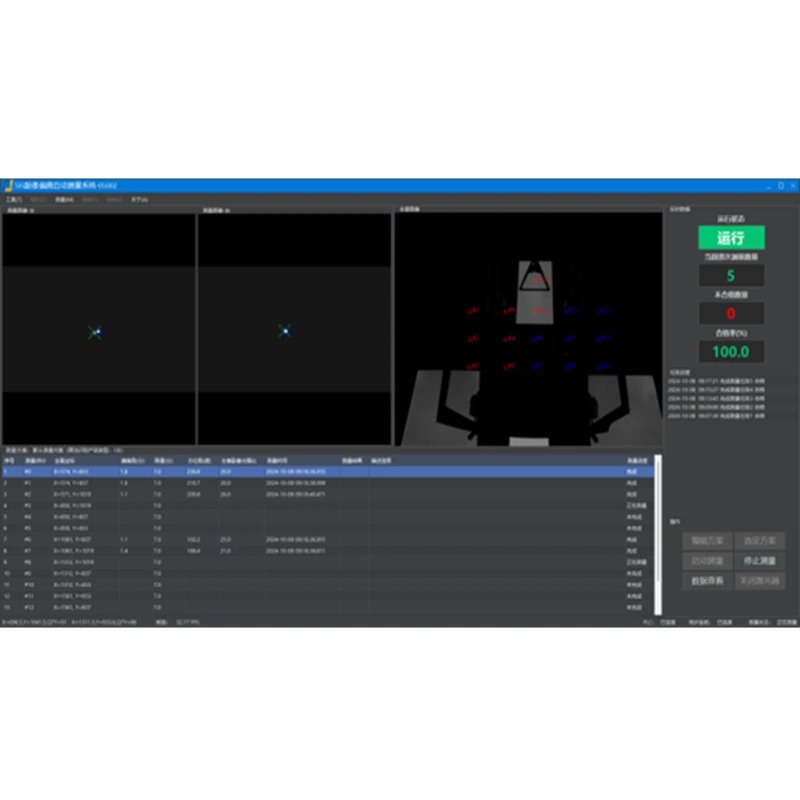
When an Online Secondary-Image System Is Worth Evaluating
The online system is worth evaluating when an automotive-windshield program needs production-line measurement of secondary-image separation angle and the buyer can define the sample, points, installation angle, darkroom plan, motion, data need, and acceptance method. It is also a productive entry point when a new model or plant program has not yet determined whether a standard station, a modified configuration, or a custom system is required.
For laboratory planning, review the Secondary Image Separation Test System Lab version. For a different optical variable, consider the OWADMS-01 Optical Wedge Angular Deviation Measurement System. See the Online Secondary Image Separation Test System for direct system details.
What to Send for a Model-Changeover or New-Station Review
- Windshield drawing, construction, dimensions, model variants, and sample photos
- Measurement objective, secondary-image points, designated installation angle, and acceptance method
- Required point count, target cycle, sensor or motion concept, and support requirements
- Darkroom cover plan, utilities, site layout constraints, operator workflow, and alarm response
- Report, storage, export, database, API, or other integration requirement
- Installation country, budget range, project timeline, and technical owner
FAQ
Does a windshield model changeover use a generic template by default?
No. A changed model should be reviewed against its sample dimensions, points, installation angle, movement, support, darkroom, data, and acceptance requirements.
Does the 40-points-in-80-seconds baseline apply to every windshield?
No. It is a customized baseline. Confirm the actual point plan, motion, sensor concept, and station conditions for the project.
Does the system make the final pass/fail decision automatically?
No. It can alarm and retain or export results. The buyer owns the acceptance basis, escalation rule, and release decision.
Post time: Aug-21-2026