
A windshield team may describe a double image, a ghosting concern, a model-change problem, or an optical complaint that is delaying a program discussion. Those observations are commercially urgent, but they are not yet a measurement plan. Before anyone selects a system, the team needs to identify the sample, the camera area or other area to examine, the dedicated points, installation angle, viewing angles, output, comparison method, and the person who owns the final acceptance decision.
The Secondary Image Separation Test System is an independent measurement system that executes image-separation detection in the camera area and other areas of glass. The Lab version can test the secondary-image separation value of dedicated points at different viewing angles on a specified installation angle with vision-system guidance. The system can show an exceed-limit alarm and can record, print, store, and export the test result. That makes the Lab version worth evaluating when a windshield program needs to turn an optical concern into a defined laboratory measurement project rather than an open-ended visual debate.
The boundary is just as important as the opportunity. A secondary-image result does not prove the cause of every ghosting symptom, establish compliance, or guarantee an online-station design. The buyer still needs to decide which physical variable is relevant, how samples will be compared, and what result is sufficient for the next engineering or quality decision.
Why a visible windshield symptom needs a measurement brief
Optical-quality conversations often become expensive because each stakeholder describes the issue differently. One person sees a double image, another sees a display concern, another wants a release decision, and procurement is asked to find equipment before the measurement question has been defined.
Start with a brief that identifies:
- The glass construction, dimensions, camera area or other area, and any known laminate, coating, curvature, or installation condition.
- The visible symptom and the reason the team believes secondary-image separation is worth investigating.
- Dedicated measurement points, specified installation angle, intended viewing angles, and the desired output.
- The current method, reference sample, target range or internal specification, and the decision the result must support.
- Whether the work is laboratory evaluation, R&D, supplier comparison, model change, incoming inspection, or preparation for a future station project.
- Required alarm response, records, printed or exported outputs, data owner, and final acceptance owner.
This gives a buyer more leverage in the technical conversation. It avoids a false choice between “we have no answer” and “we need a complete production system now.” A lab measurement project can be the right first step when the symptom is clear but the correct variable or workflow is not.
Lab secondary-image system facts that affect a windshield review
| Buyer question | Lab-version fact | What to confirm before selection |
|---|---|---|
| What does the system address? | The Secondary Image Separation Test System is an independent measurement system that executes image-separation detection in the camera area and other areas of glass. | Identify the actual glass area, optical question, and why secondary-image separation is the property to investigate. |
| How are measurements described? | The Lab version can test the secondary-image separation value of dedicated points at different viewing angles on a specified installation angle with vision-system guidance. | Define points, viewing angles, installation angle, sample support, reference sample, and output needed. |
| Which result workflow is named? | The system can show an exceed-limit alarm and can record, print, store, and export the test result. | Establish the buyer’s threshold, record owner, report review, escalation path, and final decision owner. |
| Which sample sizes are stated? | The stated sample-size ranges are 1.9*1.6 m and 1.0*0.8 m, customized. | Confirm actual sample dimensions, variants, handling, and whether a customized route is needed. |
| Which loading-angle range is stated? | The stated sample-loading-angle range is 15 degrees to 75 degrees, customized. | Supply the real installation condition and required viewing plan. |
| What can be customized? | Sample size, loading-angle range, measuring range, and mechanical-system movement range can be customized according to requirements. | Convert the project into a scope: samples, points, motion, data, acceptance, site, budget, and timeline. |
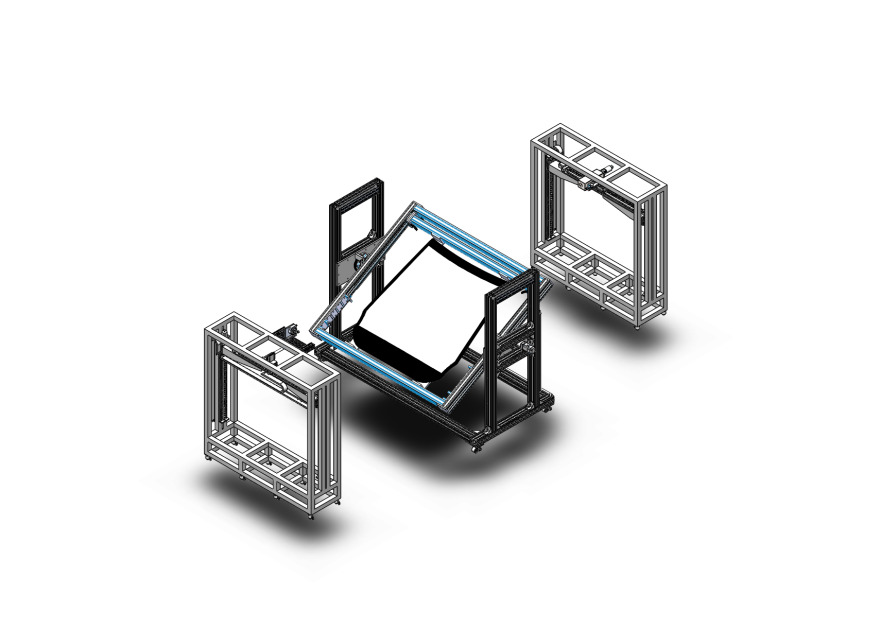
1. Turn a visual complaint into a measurable project
The fastest route to a productive inquiry is not to call every ghosting issue a single defect. A visible symptom can have multiple causes, and different optical concerns may require different measurement routes. The first job is to decide whether secondary-image separation at dedicated points and viewing angles is the question worth testing.
Once that question is defined, the Lab version gives the team a clear structure: a specified installation angle, dedicated points, viewing angles, vision-system guidance, and a result workflow. This lets a laboratory or windshield program build evidence before it commits to a larger implementation, a process change, a supplier conclusion, or an external claim.
The commercial message can be direct: if the symptom is costing meetings, rework, delay, or confidence, stop discussing it as a vague image problem. Send the sample and the decision context for a technical review that identifies the measurement route worth evaluating.
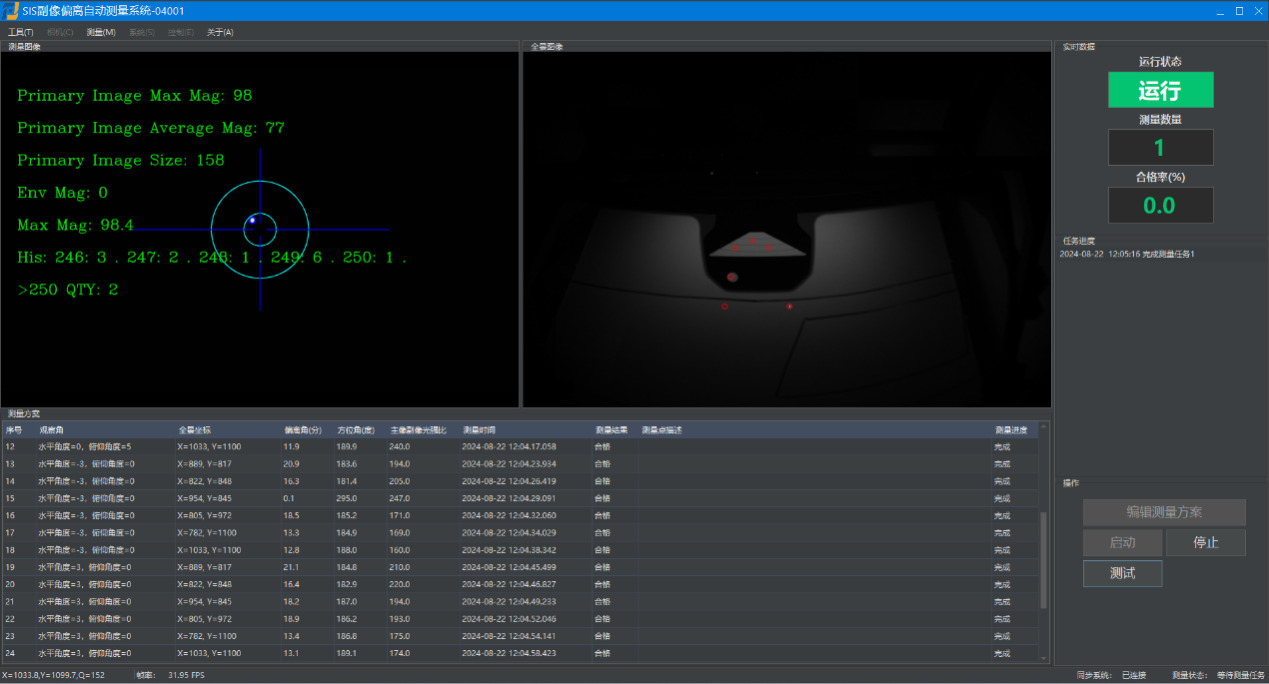
2. Make alarm, records, and exports serve a real decision
The system can show an exceed-limit alarm and can record, print, store, and export the test result. These named functions are useful only when the buyer knows what the result is expected to trigger. A laboratory should define which samples are compared, who reviews the result, how an alarm is handled, what report or export is required, and who can authorize the next action.
Do not extend these functions into an assumed cloud system, database, API, MES/ERP link, automatic online station, or customer-specific report package. If the project needs those functions, state the fields, data owner, format, interface, approval path, and integration responsibility as requirements for feasibility review.
This protects the business case. It ensures that a buyer is not purchasing a laboratory measurement system while expecting an unconfirmed production-control architecture.
3. Use the laboratory route to qualify a future station conversation
Some buyers need an immediate lab investigation. Others are already thinking about repeat sampling, multiple models, a fixture, movement, reporting, or eventual online inspection. The Lab version can help structure that earlier stage, but the next phase must be scoped separately.
For a later online discussion, review the Online Secondary Image Separation Test System as its own product and project route. Do not transfer its integration, performance, or operating facts to the Lab version. Likewise, an optical wedge or angular-deviation question may call for a different route such as OWADMS-01.
This is a stronger sales path than pretending the lab system solves every optical project. It earns the inquiry first, then lets the technical review determine whether the next step is a standard lab system, a modified workflow, a custom project, another measurement method, or no responsible fit.
When the Lab version should become a feasibility project
| Changed condition | Why it changes the scope | Practical next step |
|---|---|---|
| Sample dimensions, installation angle, viewing angles, points, or motion differ from the initial plan | The system is defined around a specific measurement program, not an abstract windshield label. | Submit samples, drawings, loading/viewing angles, areas, points, and target output for scope review. |
| The project needs a custom fixture, data field, report, interface, or integration | These are not assumed current functions beyond the named record/print/store/export workflow. | Define hardware, software, reporting, interface, and approval requirements for feasibility review. |
| The buyer needs online throughput, model changeover, or a production-station layout | A laboratory project and an online-station project are different routes. | Share sample flow, model variants, points, cycle target, site layout, data, and acceptance method for a separate review. |
| The result will be used for regulatory, customer, or final acceptance decisions | The buyer owns the applicable method, correlation, threshold, and approval process. | Establish the reference method, internal specification, comparison plan, and final decision owner. |
Jeffoptics can evaluate tailored hardware, software, fixture, reporting, or system-integration requirements once the project details are known. The outcome may be a standard system, a modified workflow, a custom project requiring feasibility work, another measurement route, or no responsible fit identified. No performance, compliance, price, delivery, or result should be assumed in advance.
What to send in a useful Lab-version RFQ
- Windshield or other glass construction, dimensions, sample photos, camera area or other area, and any relevant installation condition.
- The visible symptom, why secondary-image separation is being investigated, and the decision the result must support.
- Dedicated points, installation/loading angle, viewing angles, desired range or output, current method, and reference samples.
- Required alarm response, records, print/store/export needs, report fields, data owner, and final acceptance owner.
- Laboratory, R&D, supplier-comparison, model-change, or future online-station context, including sample volume and workflow.
- Custom fixture, movement, software, reporting, interface, integration, quantity, destination, installation, training, budget range, and schedule requirements.
Review the Secondary Image Separation Test System – Lab version with the actual samples and decision context before treating an optical symptom as a complete measurement specification.
FAQ
Does a Lab-version result identify the cause of every windshield ghosting complaint?
No. A visible symptom can have multiple causes. The technical review should first confirm whether secondary-image separation is the property worth measuring for the actual sample and decision.
Can the Lab version be treated as an online production station?
No. A laboratory measurement project and an online production-station project require separate scope review. Do not transfer online-system facts to the Lab version.
Can sample size, angle, range, or motion be customized?
Yes, those items are stated as customizable according to requirements. Send the sample, points, angles, target output, motion, data, acceptance method, budget range, and timeline for a feasibility review.
Post time: Aug-10-2026