
Start a JF-6 purchase by defining the stress-depth task, then separate the requirements that change the sample interface or workflow. JF-6 uses scattered light photoelasticity to measure the stress distribution of chemically tempered glass. The stated stress range is CS 0~2000 MPa. It is a candidate for laboratories that need distribution information, while a custom project becomes relevant when the sample, required output or operating arrangement extends beyond the standard task.
The distinction matters commercially. A laboratory may need a suitable measurement instrument immediately, while a broader automation or data project can introduce different responsibilities and acceptance work. A clear scope lets the buyer discuss both routes without treating an unconfirmed development requirement as a feature already supplied.
Define the standard measurement starting point
The stated depth-of-layer range is DOL 10~600 μm. The sample size is flat. Together with the stress range, those facts give the technical team an initial envelope for evaluating a representative sample.
| Configuration detail | JF-6 starting point | Buyer decision |
|---|---|---|
| Method | Scattered light photoelasticity | Is stress distribution the needed output? |
| Stress range | CS 0~2000 MPa | Does the expected stress fit the required envelope? |
| Depth-of-layer range | DOL 10~600 μm | Does the relevant depth fall within the task? |
| Sample form | Flat | Can the proposed sample be evaluated in this form? |
| Light source | 520 nm laser below 10 mW | Include the instrument in the laboratory’s operating arrangements |
| Software | JF-6 Glass Stress Meter Software | Define any additional output requirements separately |
Configuration reference: JF-6 Glass Stress Meter official product description, technical baseline reviewed 17 October 2026. The ranges and sample description apply to this model; they are not an accuracy specification, a complete mechanical envelope or an acceptance limit for the glass.
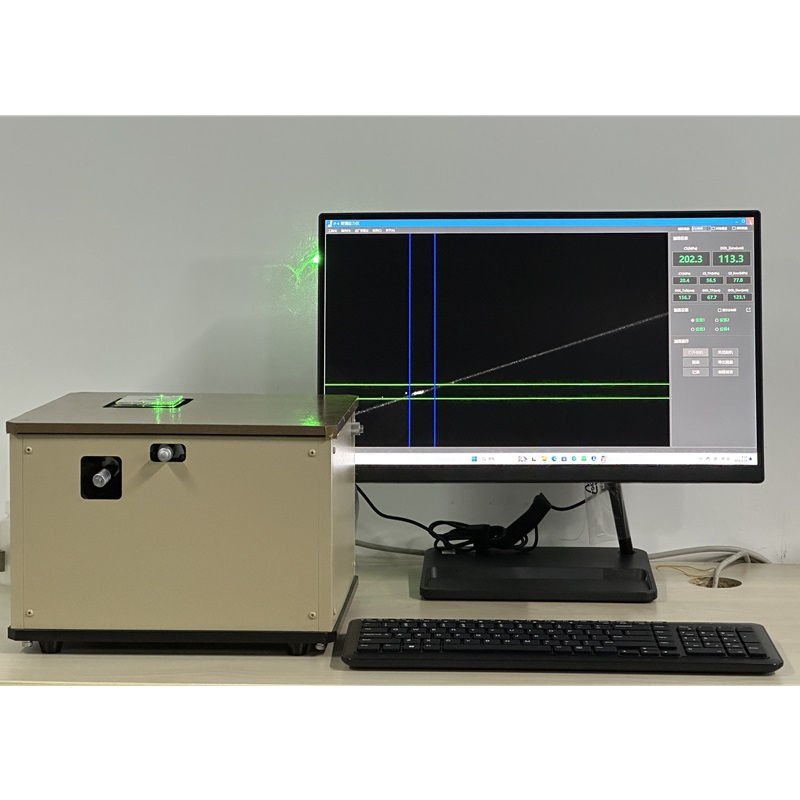
Use distribution information to frame the laboratory decision
Chemical strengthening introduces compression near the glass surface. A laboratory investigating the strengthened layer needs to state whether it wants a surface value, a depth measure, a distribution or several outputs. Starting with the physical property prevents an equipment comparison from collapsing into a single maximum-stress number.
For flat chemical-glass samples, distribution measurement provides a route to examining how stress changes with depth. Connect that evidence to a specific question, such as comparing candidate materials or deciding what to investigate next. Keep specimen identity, strengthening history and measurement locations with the result.
The stress and depth ranges help screen a measurement requirement, but they do not establish the smallest meaningful difference between two samples. If the project depends on distinguishing close results, put the required discrimination and reference method into the technical discussion.
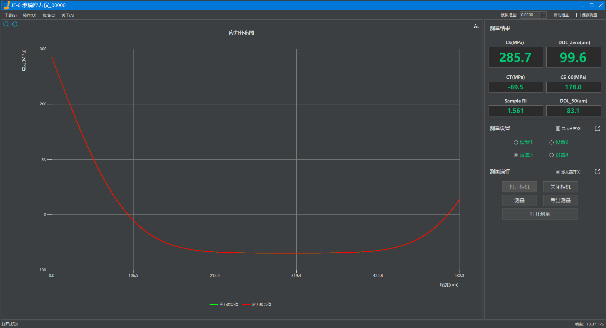
Identify the ion-exchange route before comparing models
JF-6 can measure the stress distribution of chemically strengthened glass with Li+ to Na+ ion exchange. This gives laboratories working with that exchange route a specific model to evaluate rather than assuming every chemical-glass meter has the same applicability.
Supply the base-glass designation, relevant exchange steps and target depth or distribution question. A family label such as “chemically strengthened glass” leaves important material context unresolved. Representative samples and the required measurement are more useful inputs than a general request for the largest range.
Where the composition or treatment differs, ask Jeffoptics to assess the measurement route. That assessment may point to the standard instrument, a changed configuration or a development project; the purchase discussion should make the proposed route explicit.
Separate an instrument requirement from a development requirement
JF-6 uses JF-6 Glass Stress Meter Software. If your laboratory also needs a custom report, a specific file structure, automatic sample identification or a connection to another quality system, describe each as a requirement for assessment. Do not assume those functions are included merely because software accompanies the instrument.
| Requirement | Practical scoping action |
|---|---|
| Flat-sample stress distribution within the stated ranges | Evaluate the standard measurement route with representative material |
| Curved, inaccessible or otherwise unusual sample | Review geometry and sample presentation before defining a solution |
| Customer-specific record or report | Provide an example of the required information and intended use |
| Automatic loading or production integration | Define mechanical ownership, interfaces, cadence and acceptance responsibilities |
Jeffoptics can evaluate tailored hardware, software and system-integration requirements. Feasibility, scope, performance targets and delivery terms should be agreed after review. A proposed function belongs in the project specification until its implementation is confirmed.
Make acceptance proportional to the actual purchase
For a standard instrument evaluation, agree the sample set, measured outputs and comparison basis. For a custom project, add the changed functions, interface responsibilities and how each will be demonstrated. Keeping these two scopes clear makes technical review and commercial comparison more practical.
Avoid turning a stress profile into a guaranteed mechanical-strength conclusion. The instrument provides measurement evidence; the buyer owns the relevant product decision and any additional testing required to support it.
Request a standard-versus-custom review
Use Contact Us to request a JF-6 configuration review. Send the glass and treatment, sample dimensions and flatness or curvature, target stress/depth envelope, required outputs, reference method, inspection frequency and operating environment. Identify optional fixture, report or integration requirements separately, and include quantity, installation country, budget range and project timing so Jeffoptics can assess a bounded route forward.
FAQ
Does the standard flat-sample description cover curved glass?
Treat curved glass as a separate geometry requirement. Send the dimensions and curvature for a tailored-solution assessment.
Does the stress range specify measurement accuracy?
No. A range describes the measurement envelope. Discuss the accuracy and discrimination needed for your decision separately.
Can a quality-system connection be included in the inquiry?
Yes. Specify the data, interface and workflow as a custom requirement for evaluation rather than assuming a ready-made connection.
Post time: Oct-22-2026