
A repeat-measurement workflow for chemically strengthened glass should begin with the question the laboratory wants its records to answer. JF-6 uses scattered light photoelasticity to measure the stress distribution of chemically tempered glass. The stated stress range is CS 0~2000 MPa. The stated depth-of-layer range is DOL 10~600 μm. Those anchors give a quality or development team a structured starting point for planning repeated review of stress-distribution information.
The workflow is not a substitute for an internal acceptance plan. The laboratory must specify sample identity, handling, repeat count, review logic, and the action taken after a result. JF-6 supports the measurement part of that defined process.
What JF-6 contributes to a repeat-measurement plan
| Confirmed item | Buyer planning use |
|---|---|
| Scattered-light photoelasticity | Identifies the stated technique for stress-distribution measurement. |
| CS 0~2000 MPa and DOL 10~600 μm ranges | Gives the team explicit parameters for scoping the evaluation. |
| Flat sample size | Makes geometry a first technical question rather than a late restriction. |
| Li+ to Na+ ion-exchange application | Identifies a stated chemically strengthened-glass use case. |
| JF-6 Glass Stress Meter Software | Gives the buyer a named software element to discuss in the workflow. |
Configuration reference
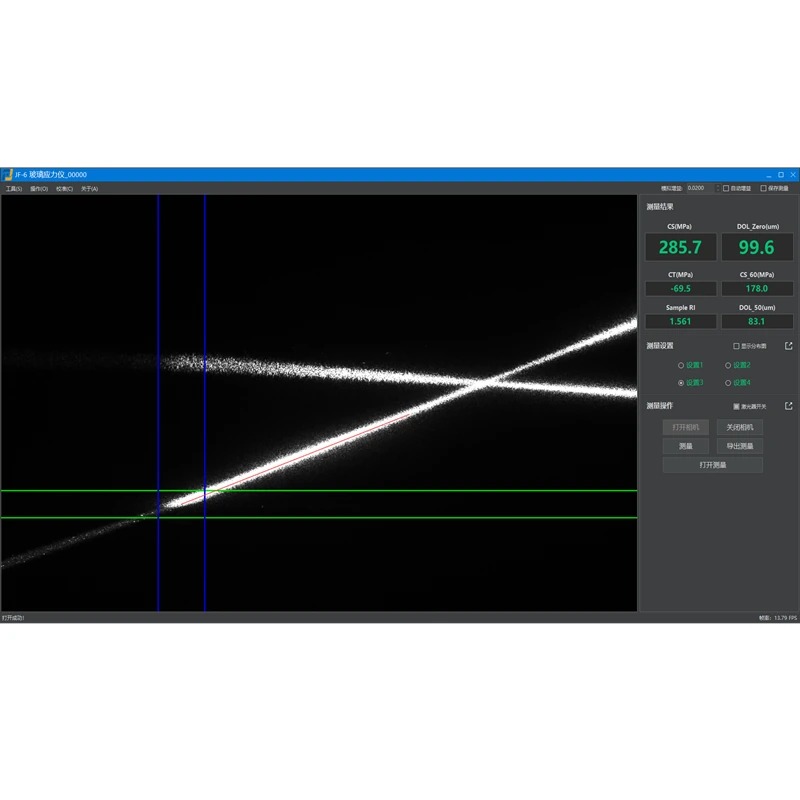
The confirmed product is the JF-6 Glass Stress Meter. Its public product information was reviewed in September 2026 for the stated chemically strengthened-glass measurement context. JF-6 can measure the stress distribution of chemically strengthened glass with Li+ to Na+ ion exchange. The sample size is flat. A proposal should be reviewed against the buyer’s actual material, sample geometry, target CS/DOL range, and intended reporting process.
Buyer decision: define repeatability as a workflow question
Repeated measurement is useful when each repetition has a known purpose. A team might compare locations, samples, lots, or process-development conditions. Name that comparison first, then define the sample identifiers, preparation, sequence, and reviewer. This is more useful than collecting readings that cannot later be linked to a material or decision.
The stated CS and DOL ranges help establish which measurement discussion the team wants to have. They do not provide an automatic quality threshold. The buyer’s engineering and quality rules remain the source of the decision.
Application/support: protect the flat-sample boundary
Sample geometry belongs near the beginning of selection. The sample size is flat. That fact should appear in the internal project brief, sample request, and technical discussion so that an unsuitable physical setup is not discovered after a workflow has been purchased or scheduled.
For projects with different materials, sample handling, fixtures, or movement needs, Jeffoptics can evaluate a tailored hardware, software, fixture, reporting, or system-integration route. The buyer should send drawings, handling constraints, and the measurement objective for review.
Application/support: make reporting purposeful
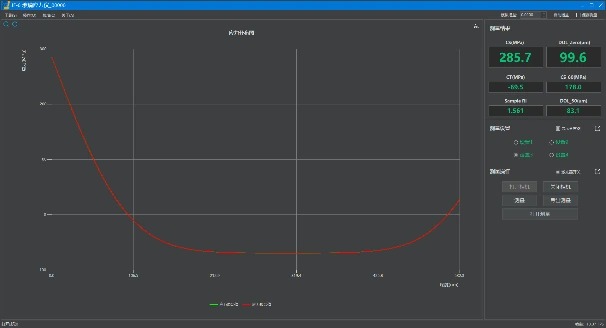
JF-6 uses JF-6 Glass Stress Meter Software. Before selection, define whether the team needs a repeat-measurement record, a development comparison, a report for internal review, or another controlled handoff. Also name who verifies the entries and who decides when a result requires escalation.
That planning step gives reporting a commercial purpose: it turns the measurement program into a reviewable sequence. It does not imply a particular software format, acceptance conclusion, or production result beyond the confirmed product scope.
What to send for a JF-6 workflow review
Send the glass material and ion-exchange route, flat sample dimensions, target CS and DOL range, proposed measurement locations, repeat count and comparison purpose, record/review requirement, any drawing or fixture constraint, quantities, destination, budget range, and timeline. The result is a technical conversation about the actual laboratory job.
FAQ
Can JF-6 be selected from the stress range alone?
No. The range is one planning input. Material, flat-sample geometry, method, repeat plan, and reporting purpose should also be reviewed.
Does a repeat-measurement workflow define acceptance automatically?
No. The buyer defines the acceptance or escalation rule that uses the results.
Can custom handling or reporting needs be discussed?
Yes. Jeffoptics can evaluate a tailored hardware, software, fixture, reporting, or system-integration project from the requirement.
Post time: Sep-24-2026