
Tempered-glass surface-stress spot checks are easier to plan when the measurement, calculation, and record step travel together. JF-1Wifi is applied to surface-stress measurement of thermally toughened, heat-strengthened, and annealed glass on the tin side using the enhanced GASP method. The stress meter connects to a mobile phone through WiFi, making it a practical candidate for teams that need a mobile inspection workflow.
The product has three versions: a tempered soda-lime glass version, a tempered borosilicate glass version, and a multi-functional dual-light-source version for tempered soda-lime and tempered borosilicate glass. The measurement range is 15–300 MPa. Resolution is 2.3 MPa for soda-lime glass and 1.9 MPa for borosilicate glass.
JF-1Wifi Facts That Shape Mobile Spot Checks
| Confirmed detail | Why it matters |
|---|---|
| Enhanced GASP method on the tin side | The buyer must confirm glass surface and measurement-side conditions before selecting a version. |
| Soda-lime, borosilicate, and dual-light-source versions | Glass composition and the intended inspection mix drive the version discussion. |
| WiFi connection to a mobile phone | The mobile device becomes part of the measurement workflow rather than a separate afterthought. |
| Calculation, recording, and meter settings on the phone | The buyer can define how results and setup information should be handled at the inspection point. |
| 15–300 MPa measurement range | The target stress window should be compared with the selected glass and acceptance plan. |
| 2.3 MPa soda-lime and 1.9 MPa borosilicate resolution | Resolution differs by glass version and should be matched to the decision requirement. |
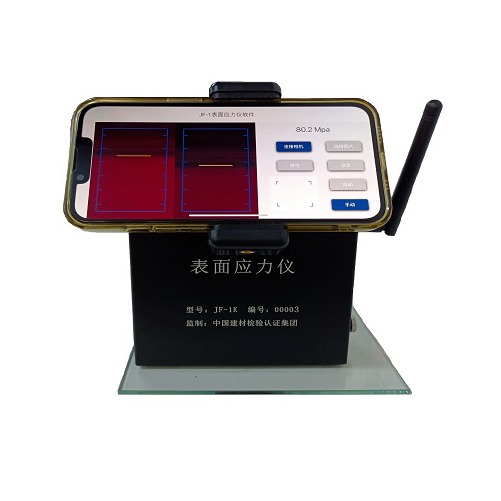
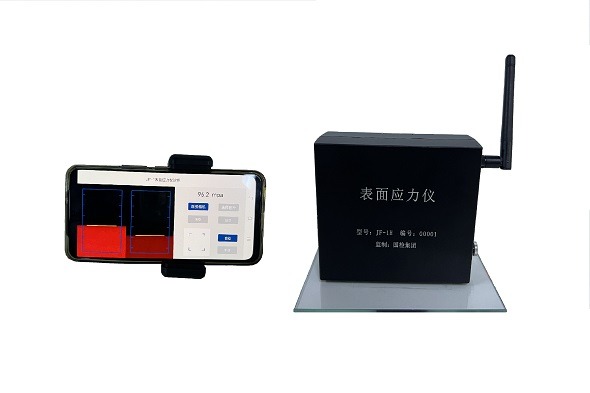
| Mobile phone and phone mount for attached or detached use | The team can compare attached and detached mobile-phone arrangements during workflow planning. |
Configuration Reference for RFQ Planning
This public configuration reference reflects the JF-1Wifi product page reviewed in August 2026. The named model supports the enhanced GASP method, tin-side measurement, three described versions, mobile-phone connection, 15–300 MPa range, and version-specific resolution. Confirm glass composition, treatment, geometry, measurement points, and record requirements before quotation.
1. Start with the Glass Version, Not the Phone
The most important choice is the glass and measurement condition. A soda-lime workflow, a borosilicate workflow, and a dual-light-source requirement are different configuration questions. The JF-1Wifi versions make that distinction visible before the buyer evaluates the convenience of a mobile device.
For each spot-check program, state whether the glass is thermally toughened, heat-strengthened, or annealed, whether the tin side is accessible, and whether one composition or several compositions will be inspected. This keeps the phone workflow connected to the physical measurement requirement.
2. Keep Calculation and Records at the Inspection Point
Stress-value calculation, recording, and stress-meter settings can be completed on the mobile phone. That matters when an inspector needs to compare several locations, confirm setup information, or keep the measurement action and its record in the same working sequence.
It includes a mobile phone and phone mount for attached or detached use. The right arrangement depends on how the sample is presented, where the operator stands, and what the quality team expects to retain. JF-1Wifi provides the mobile workflow components; the buyer still defines identifiers, acceptance limits, sampling frequency, and any wider database or interface requirement.
3. Use the Range and Resolution to Define the Decision
The 15–300 MPa range gives the buyer a concrete starting point for tempered-glass spot-check planning. Resolution is 2.3 MPa for soda-lime glass and 1.9 MPa for borosilicate glass, so the selected version and glass composition should appear in the inspection specification.
Do not choose a meter from the stress number alone. Include sample thickness, surface access, curvature, coating, measurement points, reference samples, and the internal decision that follows each reading. If the inspection station needs a special fixture, different workflow, or additional software connection, Jeffoptics can evaluate a tailored route after reviewing those inputs.
When JF-1Wifi Is Worth Evaluating
JF-1Wifi is a practical candidate for mobile tempered-glass spot checks when the sample matches one of its described glass versions and the buyer values WiFi connection to a phone for calculation, recording, and settings. It is also worth discussing for quality teams that need a compact inspection routine across defined sample points.
If the project mixes glass types, uses unusual geometry, or needs records beyond the described phone workflow, request a technical review. Jeffoptics can assess standard fit, a changed configuration, or a customised hardware/software route; feasibility, price, schedule, and final performance require project review.
See the JF-1Wifi Surface Stress Meter for the product anchor and the surface stress meter category for related models.
Send These Inputs for a Spot-Check Fit Review
- Glass composition, treatment, tin-side access, thickness, dimensions, and curvature
- Target stress range, resolution expectation, points, and acceptance basis
- Number of versions, operators, locations, samples, and inspection frequency
- Phone arrangement, identifiers, records, export, and wider interface requirements
- Destination, budget range, and project schedule
FAQ
Which glass versions are available for JF-1Wifi?
The product has a tempered soda-lime version, a tempered borosilicate version, and a multi-functional dual-light-source version for tempered soda-lime and tempered borosilicate glass.
Can calculation and recording be completed on the phone?
Yes. Stress-value calculation, recording, and stress-meter settings can be completed on the mobile phone, which connects to the meter through WiFi.
Is JF-1Wifi suitable for every mobile inspection project?
No. Confirm glass version, treatment, tin-side access, geometry, range, and record needs. Special fixtures or data workflows should be discussed as a tailored requirement.
Post time: Sep-08-2026