
When a glass batch is being questioned, the pressure is real: a release is waiting, a process change is under debate, or a customer-facing issue has made the quality team look for faster evidence. The risky move is to treat any one reading as an automatic answer. The useful move is to define the sample, edge condition, property to measure, comparison method, report requirement, and the person who owns the final release decision.
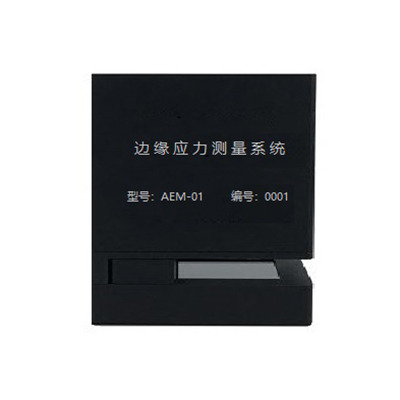
AEM-01 uses the photoelastic principle for non-destructive glass edge-stress measurement. It measures stress distribution from compression to tension at about 12 Hz. Software functions include setting, measurement, alarm, record, and report. The AEM-01 measurement method references ASTM C1279-13. These facts make AEM-01 worth evaluating when a team needs a structured edge-stress evidence route for factory production measurement, quality control, or spot checks – not a substitute for buyer-owned acceptance judgment.
The distinction is commercially important. A report can focus a technical conversation. It cannot declare a batch acceptable without a defined requirement, sample plan, threshold, reference method, and quality owner. A buyer who brings those inputs to the inquiry is far more likely to reach a usable solution than one who asks only for a meter price.
Why edge-stress reporting is a decision workflow
An edge-stress question often appears as a symptom: breakage concern, variation between batches, a furnace or fabrication question, an incoming sample dispute, or a request for more confidence before a release. The symptom is urgent, but it does not prove the root cause or identify the right measurement by itself.
The first review should establish:
- Which glass construction, thickness, treatment, edge finish, coating, paint, or laminate condition is being discussed?
- Which exact edge and locations need to be reviewed?
- Is the goal a process comparison, spot check, incoming inspection, failure investigation, or another decision?
- What reference sample, target range, standard, or internal specification will be used?
- What alarm response, record, report, and escalation path does the buyer require?
- Who will own the final acceptance or release decision?
That is how a measurement request becomes a high-quality inquiry. It lets a supplier discuss the standard AEM-01 workflow honestly while exposing any need for a different model, a modified procedure, or a custom project.
AEM-01 facts that affect a batch-review workflow
| Buyer question | AEM-01 fact | What to confirm before selection |
|---|---|---|
| What property is measured? | AEM-01 uses the photoelastic principle for non-destructive glass edge-stress measurement. | Confirm that edge stress is the property worth investigating rather than assuming it explains every symptom. |
| What is the measurement context? | The AEM-01 measurement method references ASTM C1279-13. | Define the buyer’s actual standard, internal method, reference sample, and acceptance responsibility. |
| What measurement behavior is named? | It measures stress distribution from compression to tension at about 12 Hz. | Agree on the sample, edge section, measurement length, comparison sequence, and required review pace. |
| Which workflow functions are named? | Software functions include setting, measurement, alarm, record, and report. | Define the actual alarm logic, report fields, record owner, and escalation path; do not assume unlisted interfaces. |
| Which glass types are named? | AEM-01 applies to laminated, annealed, heat-strengthened, and tempered glass. | Confirm the actual construction, thickness, edge finish, and optical condition before recommendation. |
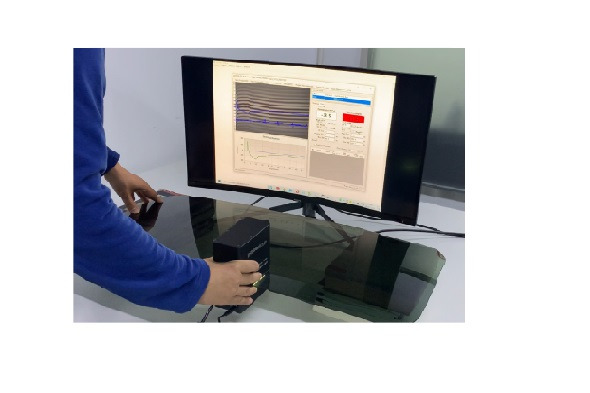
| What operating arrangement is named? | The sample measurement port uses a positioning block and three positioning points; the probe head connects to a computer through USB 2.0. | Review sample support, accessible edge length, positioning, and the planned work area. |
| What use contexts are stated? | The product is positioned for factory production measurement, quality control, and spot checks. | Match the standard workflow to the actual quality decision instead of claiming automatic release control. |
1. Give the batch discussion a defined evidence path
The strongest use of a measurement report is not to replace engineering judgment. It is to make that judgment easier to examine. A team can define which samples will be compared, which edge zones are relevant, how values will be interpreted, what requires an alarm or second review, and who signs off on the next action.
AEM-01′s named setting, measurement, alarm, record, and report functions give the inquiry practical shape. A quality manager can ask for a specific outcome: a controlled measurement route that supports a batch discussion. A technical procurement team can then supply the missing information that turns the request into a viable evaluation rather than an open-ended search for “quality control equipment.”
The business case may be urgent, but the claim stays honest: non-destructive edge-stress evidence can inform a decision. It does not automatically release a batch, prove compliance, or establish why a failure occurred.
2. Investigate the variable before changing the process
When a team sees breakage, rework, or an unexplained quality concern, it is tempting to change a furnace setting, challenge a supplier, or add a blanket inspection step immediately. A better first question is whether edge stress is the measurable variable that needs attention.
AEM-01 applies to laminated, annealed, heat-strengthened, and tempered glass. That is a useful stated territory, but it does not make every construction, edge finish, coating, painted area, geometry, or access condition an automatic fit. The buyer should bring representative sample information, photos, drawings if needed, and the decision that the measurement must support.
This turns a general problem into a productive technical conversation. If the measurement plan confirms that edge stress is useful evidence, the buyer can establish a comparison. If it does not, the team has still avoided presenting an unsupported diagnosis as fact.
3. Make records and reports serve the real escalation path
Records are valuable only when the organisation knows what happens next. Before purchasing, define the report recipient, the sample identity, the date and location, the comparison reference, any alarm response, and who can decide whether the batch proceeds, is rechecked, or requires a different investigation.
Do not extend the named functions into claims of a current cloud platform, database, API, MES/ERP connection, automatic production line, or customer-specific report package. Those may be exactly the requirements that make a project valuable; they should be submitted as requirements for a hardware, software, reporting, fixture, or system-integration feasibility review.
The same principle applies to standards. The ASTM reference helps frame the measurement context, but it is not a certification claim and it does not replace the buyer’s own compliance process.
When a standard AEM-01 workflow needs a different route
| Changed condition | Why it changes the scope | Practical next step |
|---|---|---|
| The edge is painted, opaque, or has an optical condition that changes the intended method | A standard edge-stress workflow may not answer the actual optical-access question. | Send photos, construction details, finish, thickness, and target locations; compare an alternative such as AEM-03 or a project route. |
| The buyer needs a fully automatic line, multi-station handling, or a specific cycle target | AEM-01′s stated use context is not a complete line-integration specification. | Define sample flow, points, motion, data, acceptance path, site conditions, and timing for feasibility review. |
| The project needs reports, exports, database fields, API, MES/ERP, or customer-specific interfaces | Those functions are not assumed as current standard capabilities. | State the required data and reporting outcome as a custom requirement. |
| The buyer wants to use one result as a release or compliance decision | The acceptance method belongs to the buyer’s quality system. | Define the applicable requirement, comparison plan, threshold, validation procedure, and decision owner. |
Jeffoptics can evaluate tailored hardware, software, fixture, reporting, or system-integration requirements once the project is specific. The outcome may be a standard fit, a modified workflow, a custom project requiring feasibility work, or no responsible fit identified. Do not assume performance, cost, delivery, or an approval result before that review.
What to send in an AEM-01 RFQ
- Glass construction, treatment, thickness, edge finish, coating, paint or frit condition, and representative photos.
- The edge-stress question, measurement locations, expected range, and the decision the result must support.
- Current inspection or test method, reference samples, applicable standard or internal specification, and acceptance owner.
- Required alarm response, records, report fields, review frequency, sample volume, and escalation path.
- Sample support, available edge length, work area, site conditions, and any unusual geometry or access condition.
- Required software, reporting, data, interface, automation, fixture, quantity, destination, budget range, installation, training, and schedule.
Start with the AEM-01 Automatic Edge Stress Meter and the actual batch question, rather than treating a generic edge-stress report as proof of a final result.
FAQ
Does AEM-01 automatically approve or release a batch?
No. AEM-01 can support setting, measurement, alarm, record, and report workflow. The buyer’s quality system still defines the threshold, comparison method, escalation rule, and final release decision.
Does an ASTM reference mean AEM-01 is certified for every quality requirement?
No. The reference provides measurement context. It is not a product-certification or universal compliance claim.
Can AEM-01 determine the root cause of every breakage or quality issue?
No. Edge stress may be a valuable property to investigate, but an observed issue can have multiple causes. Confirm the sample, method, and decision objective before drawing conclusions.
Post time: Aug-14-2026